
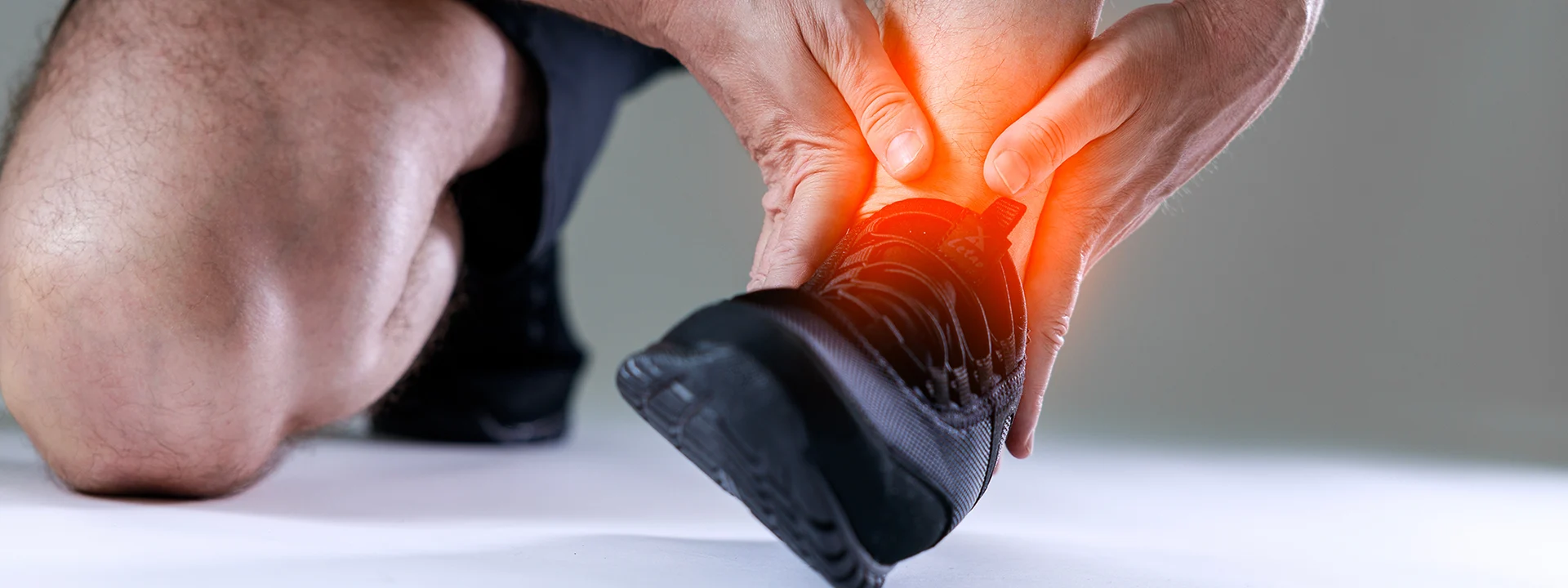
Bendy Ankles: What Hypermobility Means for Your Feet
Bendy Ankles: What Hypermobility Means for Your Feet
Can you bend parts of your body like a contortionist, or have you been called “double-jointed” your whole life? You might be hypermobile.
About 1 in 10 people are hypermobile, meaning some of their joints can move beyond the usual range. It’s more common in females, children and people of Asian background, and it can be a real advantage if you’re a dancer or gymnast.
For most people, hypermobility is harmless and causes no pain at all. However, for a smaller group – particularly those with Hypermobility Spectrum Disorder (HSD) or hypermobile Ehlers-Danlos Syndrome (hEDS) – it can bring pain, fatigue and recurrent injury. These broader connective tissue conditions can also cause symptoms beyond the joints, such as gut issues, headaches, dizziness or fainting, and very stretchy skin.
If you’re interested in learning more about hypermobility disorders, our colleague Naomi has written a great overview in Hypermobility Unpacked. In this post we’ll zoom in on how hypermobility affects the foot and ankle.
Why do your feet matter?
Our feet are like the foundations of a building. When the foundations are strong and stable, the rest of the building is well supported. In the same way, when your feet aren’t functioning well, the effects can be felt further up the body – in the knees, hips and lower back.
What’s happening in a hypermobile ankle?
Our ankles rely on ligaments, joint capsules, muscles and tendons for stability. They also rely on proprioception – your body’s sense of where your joints are – which lets your muscles react quickly to uneven ground before the ankle rolls.
In people with hypermobility, the ligaments and joint capsules are more elastic than the average person’s, so they give the joint less passive support. This means the muscles and tendons have to work harder to keep the ankle stable. Proprioception is often reduced too, making it harder to sense and correct an ankle that’s starting to roll.
In the foot and ankle, this commonly shows up as:
• Flexible flat feet – an arch that’s present when you sit but collapses or rolls in (pronates) when you stand
• Frequent rolled ankles, often from low-force mechanisms like uneven footpaths, with or without ligament damage
• Poor balance and joint position sense, which makes the ankle feel “wobbly” – some people find they trip over their own feet
• Tired, aching feet and legs after long periods of standing or lots of exercise
• Tendon overload – particularly the tibialis posterior and peroneal tendons, which work overtime to stabilise
• Other foot and ankle injuries, including ligament injuries, bone stress injuries, subluxations and dislocations
• Muscle aches, tightness and ongoing pain in the feet, ankles, knees, hips and lower back
• Calluses, blisters and toenail problems from the foot moving around more inside the shoe
• Unusual shoe wear, such as wearing down the inside edge of the heel
In children, fatigue in the feet and legs can show up as avoiding sport, and it’s sometimes mislabelled as a child being “lazy”.
How can podiatry help?
Our podiatrists are very experienced in working with hypermobile children and adults. Recurrent ankle sprains are one of the most common reasons hypermobile people end up in our clinic, often along with concerns about long-term ankle problems after years of sprains.
We work closely with our physiotherapists, myotherapist, dietitian and the rest of the team to provide a holistic, coordinated treatment plan, and we refer to or liaise with other health professionals when needed.
How do we assess it?
A thorough podiatry assessment will look at:
• Your sprain and injury history, symptoms and footwear
• Muscle and joint movement of the feet, ankles, legs and hips
• How your foot posture changes from sitting to standing to walking
• Single-leg balance and hopping control
• Calf, peroneal and foot muscle strength
• Gait analysis – watching how you walk and run, and how your feet interact with your knees, hips/pelvis and spine. Our in-shoe pressure analysis is great for seeing how you load your foot
What can we do to actually help?
Strength and control training
This is our key foundation. Stronger calf, peroneal and intrinsic foot muscles give your ankle the active support your ligaments can’t, and balance work helps retrain proprioception. We’re building a solid foundation from the ground up for the rest of the body to work from.
Pacing and load management
Hypermobile tissues can be slower to adapt. Building training loads gradually, planning recovery and modifying activity when needed helps avoid flare-ups. Every program is tailored to you individually.
Footwear
Look for a good fit, a firm heel counter, a stable midsole and torsional stiffness. Cushioning still has its place, but stability comes first – very soft, flexible or minimalist shoes are often the wrong fit for hypermobile feet. We can also show you lacing and fastening techniques to hold your foot securely in the shoe.
Foot orthoses
For flexible flat feet, orthotics can reduce excessive movement of the foot and ankle, take load off overworked tendons and help with fatigue. We have options ranging from over-the-counter to fully custom-made devices. They’re a support for training, not a replacement for it.
Bracing, taping and padding
A lace-up brace or taping is useful during sport, especially if you’ve had recurrent sprains – it reduces the risk of re-injury while you build strength. Padding can also help offload painful areas.
Skin and nail care
We can reduce corns and calluses, give blister-prevention advice and look after toenails affected by extra movement in the shoe.
Early intervention for kids
Getting on top of things early, while a child’s body is still growing, changing and maturing, can help prevent problems down the track.
Meet the Authors, Podiatrists Harry & Kath

Harry Katopodis
Podiatrist
North Melbourne
Harry’s Bio

Kathryn Miller
Podiatrist
Ascot Vale
Kath’s Bio